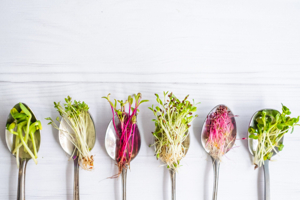
Microgreens have become a trending ingredient among health enthusiasts, chefs, and home gardeners alike. If you’re curious about the different types of microgreens you can grow or eat, this blog will introduce you to a wide variety of microgreens, their unique flavors, nutritional qualities, and why they are worth incorporating into your diet or garden.
What Are Microgreens?
Before diving into types, a quick recap: microgreens are young edible seedlings of vegetables and herbs harvested shortly after germination, when their first true leaves appear. They are known for their vibrant colors, intense flavors, and nutrient density, often containing higher levels of vitamins and antioxidants than their mature counterparts.
The popular types include microgreens of radish, carrot, spinach, fenugreek, fennel, dill, cabbage, cauliflower, beetroot, celery, garlic, onion, cucumber, sunflower, amaranth, pea shoots, parsley, moong etc. Almost edible variety of every plant family can be the source of microgreens.
Typical Microgreen Varieties
Some of the most common microgreens include:
Radish: Spicy and crunchy.
Sunflower: Nutty and crisp.
Pea shoots: Sweet and fresh.
Basil: Aromatic and spicy.
Arugula: Peppery and bold.
Cilantro: Citrus and fresh.
Beet: Earthy with a mild sweetness.
Each variety offers unique flavors and nutrient benefits.
Popular Types of Microgreens and Their Characteristics
Microgreens come from a wide range of plant families. Here’s a detailed look at some of the most popular and widely grown microgreens.
Flavor: Mild, slightly peppery, and fresh.
Nutritional Highlight: Packed with vitamin C and sulforaphane, a compound linked to cancer prevention.
Growth: Ready to harvest in about 10-12 days.
Usage: Great for smoothies, salads, and garnishing sandwiches.
Flavor: Spicy and peppery, providing a sharp and lively kick.
Growth: Very fast-growing, usually ready in 5-10 days.
Usage: Adds crunch and heat to salads, tacos, and burgers.
Flavor: Sweet, nutty, and crunchy.
Nutritional Highlight: Rich in protein, vitamins A, B complex, D, iron, calcium, and zinc.
Growth: Harvest within 7-14 days.
Usage: Excellent in salads, sandwiches, or as a healthy snack.
Flavor: Sweet and fresh, reminiscent of peas.
Nutritional Highlight: Contains fiber and anti-inflammatory properties.
Usage: Perfect for stir-fries, salads, and wraps.
Flavor: Mildly nutty and earthy.
Nutritional Highlight: Four times the lutein and beta-carotene of mature kale leaves.
Growth: Takes about 7-14 days to mature.
Usage: Popular in green smoothies, salads, and soups.
Flavor: Earthy, sweet, and slightly bitter.
Nutritional Highlight: Rich in vitamins A, B, C, and E.
Appearance: Often bright red stems and green leaves, adding color vibrancy.
Usage: Great for salads and as a decorative garnish.
Flavor: Peppery and mustardy, intense flavor.
Usage: Add a spicy punch to salads, sandwiches, and pizzas.
Flavor: Aromatic with a hint of sweetness.
Usage: Use in pasta dishes, salads, and as a fresh garnish.
Flavor: Spicy and bold, similar to mature mustard greens.
Growth: Grows quickly, usually ready in under two weeks.
Usage: Adds bold flavor to salads and sandwiches.
Flavor: Citrusy and herbaceous.
Usage: Ideal for garnishing Mexican and Indian dishes.
Other Interesting Microgreen Varieties
Besides the popular ones mentioned, there are numerous other varieties to explore:
Pak Choi (Bok Choy): Crisp texture, mild cabbage flavor.
Mizuna: Mild peppery taste and rich in antioxidants.
Wheatgrass: Known for detoxifying properties, often juiced.
Swiss Chard: Earthy with rich colors.
Collard Greens: Milder than kale, with a smooth texture.
Amaranth (Red Garnet): Beautiful deep red leaves with mild flavor.
Fenugreek: Slightly bitter and nutty, used in Indian cooking.
Dill and Parsley: Herbaceous microgreens, slower to grow but flavorful.
Lentils and Chickpeas: Nutty, crunchy microgreens from legumes.
Kohlrabi: Mild cabbage or turnip flavor with lavender stems.
How to Choose Microgreens to Grow or Eat?
Choosing microgreens depends on your taste preferences, nutritional needs, and growing conditions:
Spicy Flavor: Radish, mustard, arugula.
Sweet Flavor: Sunflower, pea shoots, basil.
Nutritional Boost: Broccoli, kale, wheatgrass.
Color Pop: Beetroot, amaranth, kohlrabi.
Quick Growth: Radish, mustard, broccoli.
Nutritional Benefits Across Microgreens
Most microgreens, regardless of variety, are highly nutritious. They often contain:
High levels of vitamins like A, C, E, and K.
Essential minerals such as iron, magnesium, calcium, and potassium.
Antioxidants and phytochemicals that help fight inflammation and oxidative stress.
Given their small size, a serving of microgreens can pack a strong nutritional punch compared to mature greens.
Microgreens represent a diverse group of tiny, flavorful, and nutrient-rich edible greens with endless varieties to choose from. Whether you prefer the peppery kick of radish, the nutty bite of sunflower, or the mild sweetness of pea shoots, microgreens offer options to satisfy your palate and health needs. Growing them at home is easy and rewarding, making them accessible for urban dwellers and food lovers.
If you want to get started with microgreens, consider starting with fast-growers like radish or sunflower, and gradually explore more varieties that suit your taste and nutritional goals.
Microgreens are truly a small addition to your diet that can make a big impact!
Would you like a detailed guide on growing these common microgreens or recipes to use them please contact us.
Leave a Reply