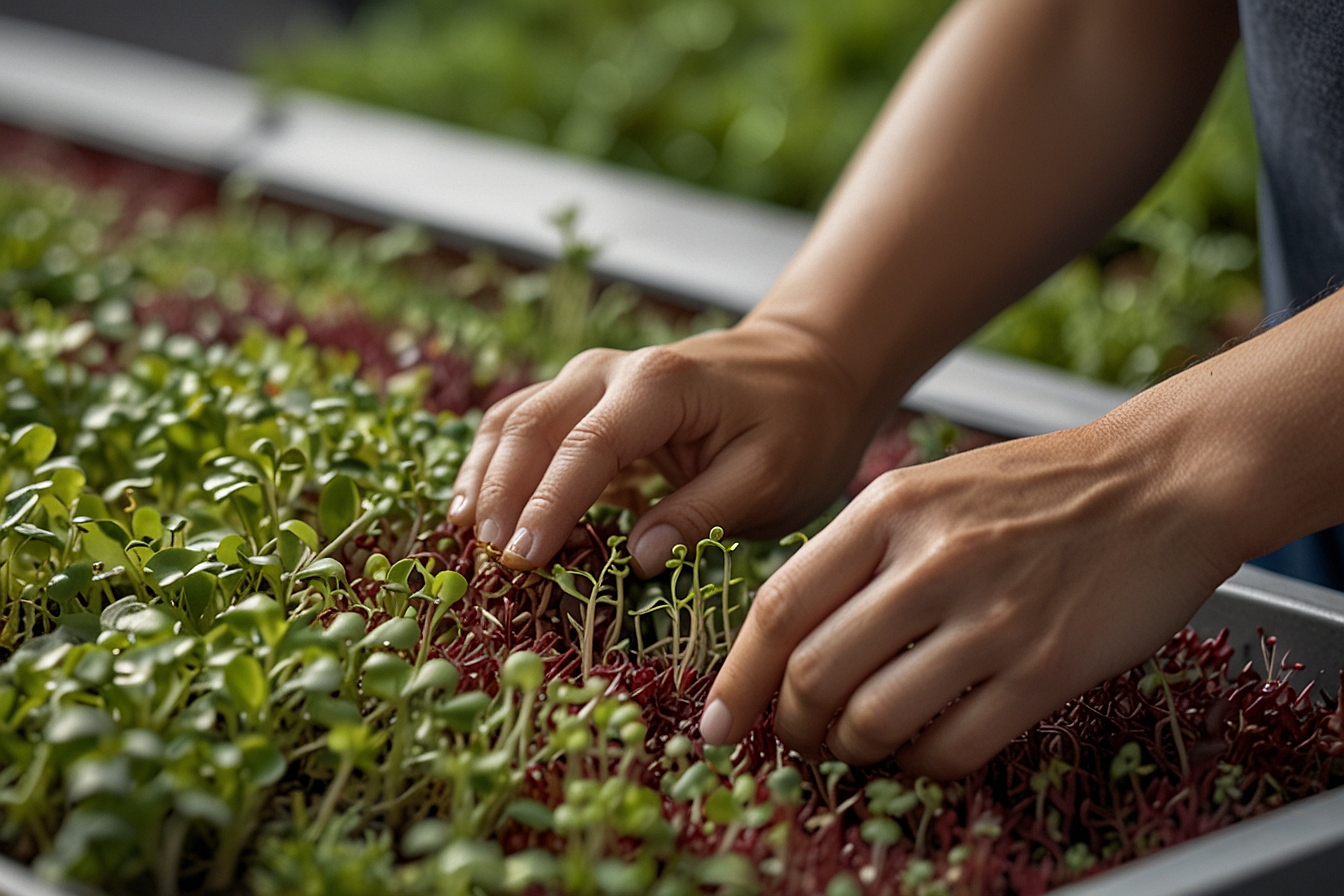
Process of Growing Microgreens:
In recent years, microgreens have gained significant popularity among food enthusiasts, health experts, and chefs alike. Small in size but big on nutrition and flavor, microgreens are redefining the way we think about greens and healthy eating. In this blog, we will explore what microgreens are, how they are grown, their nutritional benefits, culinary uses, and why they matter in today’s food landscape.
Microgreens are young vegetable greens that are harvested just after the first true leaves have developed, typically within 7 to 21 days after germination. They are seedlings of edible vegetables and herbs, including varieties like basil, radish, cilantro, arugula, beet, kale, sunflower, and pea shoots.
Microgreens can be grown both indoors and outdoors and require minimal space, making them ideal for urban gardening — something quite relevant in cities like Bengaluru, where real estate space is limited.
- Seeds: High-quality, non-GMO seeds intended for microgreen cultivation.
- Growing Medium: Soil, coco coir, peat moss, or hydroponic mats.
- Light: Natural sunlight (near windows) or artificial grow lights.
- Water: Consistent moisture but well-drained conditions.
- Harvest: Usually ready to harvest within 1-3 weeks. They are cut at the base.
Microgreens are grown similarly to regular plants but harvested much earlier:
Seeds are sown thickly on a shallow tray filled with a growing medium such as soil or cocopeat.
The trays are kept moist and under sufficient light (natural sunlight or grow lights).
Within about 1 to 3 weeks, seedlings develop their first leaves and are ready for harvest.
The microgreens are cut just above the soil line using scissors.
Their short growth cycle allows for quick harvesting and the possibility to grow multiple batches throughout the year.
Because microgreens require less time to grow compared to mature vegetables, they can be harvested multiple times a year, making them sustainable and economical for home growers and commercial producers alike.
Growing Microgreens at Home:
Microgreens are surprisingly easy to grow at home, even if you don’t have a garden:
Materials Needed:
Seeds (organic preferred)
Shallow trays or containers with drainage
Growing medium (soil or coco coir)
Water mister or spray bottle
Light source (window or grow light)
Steps:
- Fill tray with growing medium.
- Sprinkle seeds evenly and cover lightly with soil. Sprinkle seeds evenly and cover lightly with soil.
- Mist gently to moisten. Mist gently to moisten.
- Cover with a dome or plastic wrap until germination.
- Remove cover and provide 12-16 hours of light daily.
- Keep soil moist but not waterlogged.
- Harvest when the first true leaves appear, using scissors to cut just above soil.
Microgreens are more than just tiny greens — they are nutritional powerhouses packed with flavor, color, and health benefits. Their ease of cultivation, sustainability, and culinary versatility make them perfect for modern lifestyles, especially in urban centers like Bengaluru. Whether you’re a home gardener, a health-conscious eater, or a professional chef, integrating microgreens into your diet and kitchen is a smart and delicious choice.
If you’re interested, I can also provide tips on growing microgreens specifically suited to Bengaluru’s climate or recipes that feature them! Contact us
Leave a Reply